
AgrInfluence - The influence of agriculture practices on contaminant’s mobility
AgrInfluence - The influence of agriculture practices on contaminant’s mobility
AgrInfluence - L'influence des pratiques agricoles sur la mobilité des contaminants
2015 OHM Project Estarreja OHMiLeader : Durães Nuno
Keywords :
Pore waters Organic and Inorganic Contamination Agriculture PracticesDisciplines :
Geologie HydrologieAbstract :
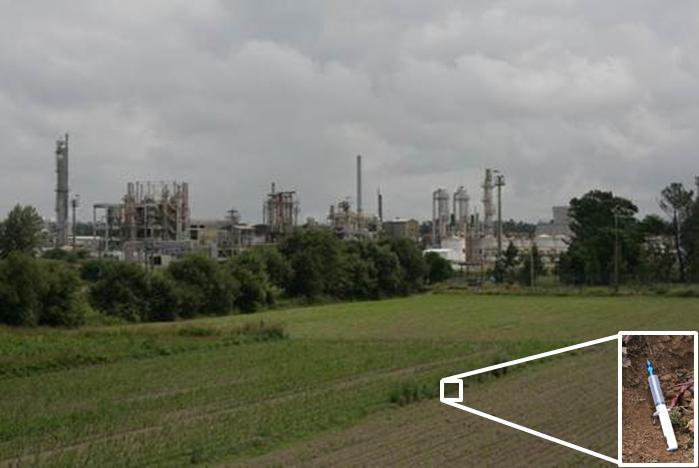 Estarreja has always been a region with extensive farming areas, developing parallel and competing for land with an important industrial pole - the Estarreja Chemical Complex (ECC). For decades, the different ECC industries disposed solid wastes directly on the permeable sands without any kind of containment or impermeabilization, and discharged liquid effluents directly on streams connected to the coastal lagoon, without any previous treatment. Nowadays, the increasing of environmental consciousness led to an improvement of waste management practices. Although there are still signs of long term soil and groundwater contamination and the extension and persistence of contaminants are not fully understood, in part due to geological features (unconsolidated detritic sedimentary rocks) that allows the contaminant’s dispersion and cause high aquifer vulnerability.
Pore waters are very specific solutions, generally with high concentrations due to the greater residence time than percolation waters, which promote a high water-soil interaction. For this reason these solutions are the transference medium for excellence of inorganic and organic compounds between soils and plants. In this sense, the study of pore waters can give valuable information about the mobility and bioavailabitity of contaminants for plants.
In this project we propose to study the influence of the agriculture practices in the contaminants mobilization, focusing in pilot contaminated areas of Estarreja, and using pore waters as a medium to study these processes, hoping to contribute with valuable information to improve de quality of agriculture practices in the reduction of contaminant’s exposure.