Au-delà de la contamination : restitution des savoirs et perspectives multidisciplinaires sur Estarreja
Beyond Contamination: Knowledge Restitution and Multidisciplinary Perspectives on Estarreja
2026
OHM Project
Estarreja OHMi
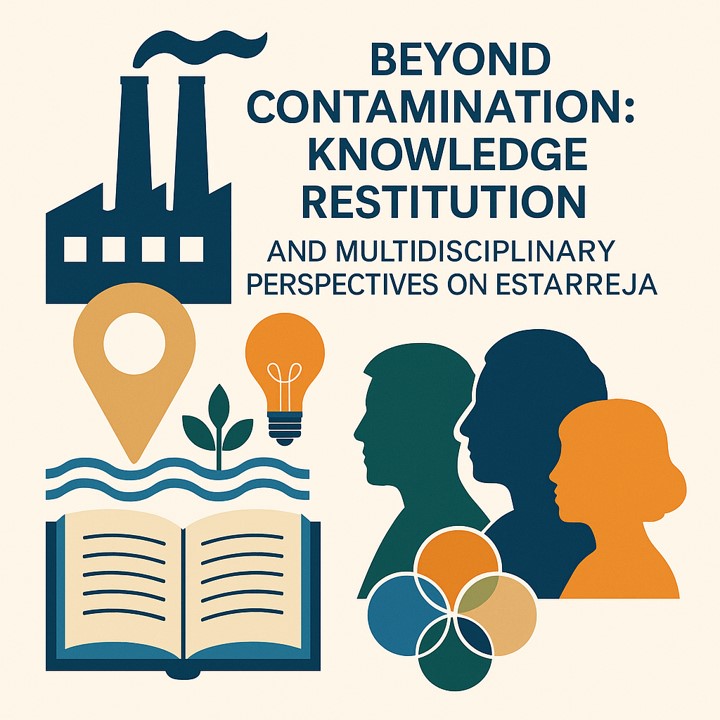
Leader : Patinha Carla
Project leader’s laboratory : Geoscience Department, University of Aveiro
Full address of laboratory : University of Aveiro, Geoscience Department. Campus de Santiago, 3810-193 Aveiro, Portugal
Keywords :
Industrial contamination; Knowledge restitution; Multidisciplinary research; Community engagement; Territory and memory
Disciplines :
Sciences du système terrestre
Biologie environnementale, écologie et évolution
Le monde social et sa diversité
Abstract :
Ce projet s’appuie sur plus de vingt ans de recherche pluridisciplinaire sur Estarreja, une région présentant un important passif de contamination industrielle au Portugal. Bien que de nombreuses connaissances existent sur les voies de contamination, les impacts écologiques et les perceptions du risque, ces informations demeurent souvent dispersées et peu accessibles à la population qui a contribué à leur production. Le projet vise à combler cette lacune en intégrant les recherches environnementales et sociales accumulées et en les restituant de manière claire et constructive.
Articulant les sciences environnementales portugaises et les sciences sociales françaises, et s’inspirant d’expériences internationales sur la vie dans des environnements contaminés, le projet développe un programme d’un an structuré en trois tâches : (1) une synthèse pluridisciplinaire des études existantes ; (2) un engagement communautaire comprenant des séminaires avec des spécialistes d’autres territoires contaminés, des ateliers avec les habitants et des actions éducatives dans les écoles ; et (3) une diffusion publique par une exposition et deux publications — une synthèse scientifique et un livret destiné au grand public.
Ces actions renforceront la confiance entre citoyens, chercheurs et autorités locales, soutiendront une prise de décision éclairée et contribueront à réduire la stigmatisation historique liée à la contamination. Le projet participe également à la formation des jeunes générations en histoire environnementale, communication du risque et résilience socio-écologique. Pour la municipalité, il offre des connaissances consolidées appuyant la planification territoriale et préparant la création d’un futur open lab dédié au savoir, à la mémoire et au territoire.
Translated abstract :
This project builds on more than two decades of multidisciplinary research on Estarreja, a region with a significant legacy of industrial contamination in Portugal. Although extensive scientific knowledge exists on contamination pathways, ecological impacts and risk perception, much of this information remains dispersed and insufficiently accessible to the population who helped produce it. The project addresses this gap by integrating existing environmental and social research and returning it to the community in a clear and constructive way.
Combining Portuguese environmental sciences and French social sciences, and drawing on international reflections on living in contaminated environments, the project develops a one-year programme structured around three tasks: (1) a multidisciplinary synthesis of previous studies; (2) community engagement through seminars with experts from other contaminated territories, workshops with residents and school outreach; and (3) public dissemination through an exhibition and two complementary publications — a scientific synthesis and a booklet for the general public.
These actions aim to strengthen trust between citizens, researchers and local authorities, support informed decision-making and reduce the stigma historically associated with contamination. The project also contributes to training younger generations — including students and early-career researchers — in environmental history, risk communication and socio-ecological resilience. For the municipality, the project provides consolidated knowledge to support territorial planning and communication strategies, while laying the groundwork for a future open lab dedicated to science, memory and the relationship between community and territory.